
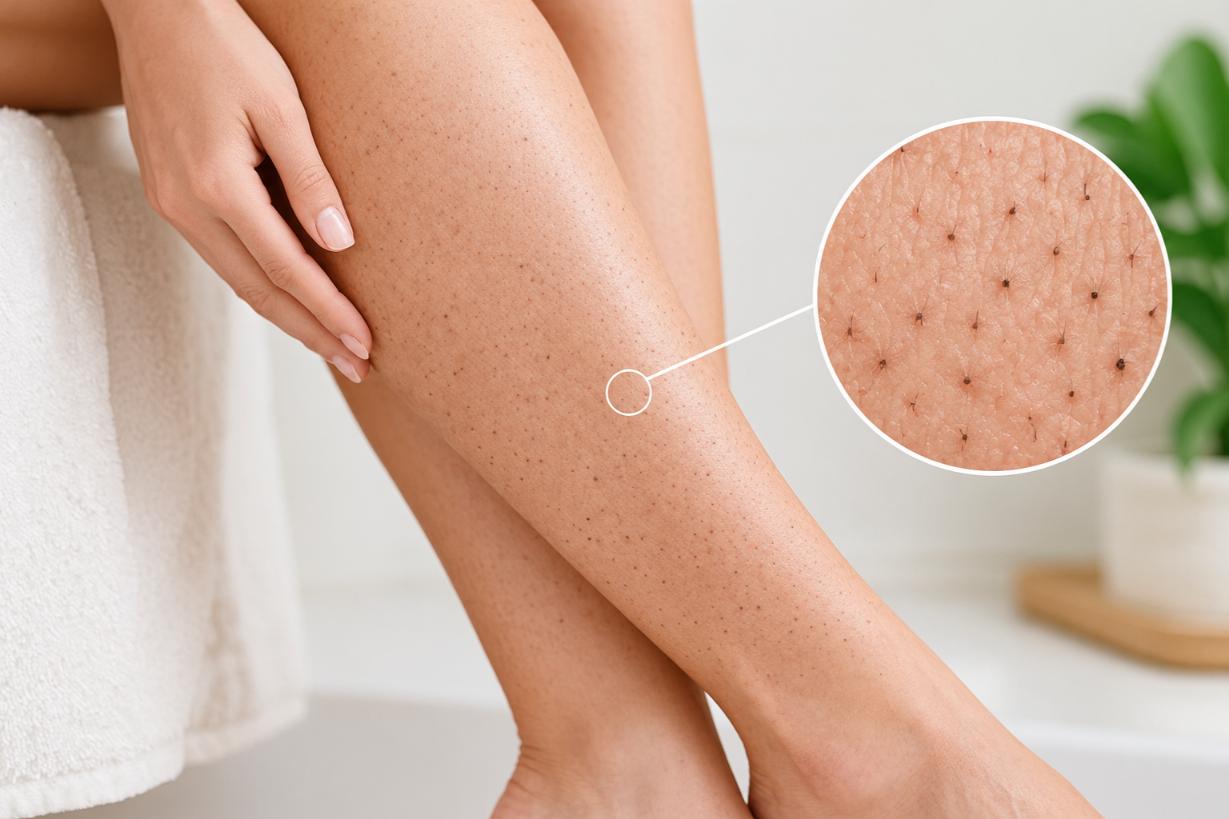
Strawberry legs are the small dark dots that appear on the legs, usually after shaving. They are caused by open pores or hair follicles that fill with oil, dead skin and trapped hair, and darken when exposed to air. Shaving irritation, ingrown hairs, dry skin and keratosis pilaris can all play a part. Gentler hair removal, regular exfoliation and moisturising often improve them.
Key takeaways
"Strawberry legs" is an everyday name, not a medical diagnosis, for dark dotted pores on the legs.
Common causes include clogged pores, shaving with a blunt razor, ingrown hairs, dry skin and keratosis pilaris.
The dots often show more on people with thick or dark leg hair, because the hair root is visible beneath the skin.
Gentle exfoliation, daily moisturiser and changing how you remove hair are the main ways to improve their look.
Red, painful or pus-filled bumps that do not settle may be an infection and should be checked by a doctor.
What are strawberry legs?
Strawberry legs describes skin on the legs that looks dotted, a bit like the seeds on a strawberry. The dots are usually dark brown or black and sit in the pores or hair follicles.
A hair follicle is the small opening in the skin where each hair grows. On the legs, these openings can become more visible after shaving, when the skin is dry, or when they are plugged with oil and dead skin. The look is common and harmless for most people, but many find it frustrating, especially in Singapore where shorts and skirts are worn all year.
What causes strawberry legs?
There is usually more than one cause at play. The table below sets out the common ones and the clues that point to each.
Cause | What is happening | Common signs |
|---|---|---|
Open, clogged pores | Oil and dead skin collect in the pore and darken when they meet air, like a blackhead | Flat dark dots, often worse on oily skin |
Shaving | A blunt blade or dry shaving irritates the follicles and leaves the dark hair root visible | Dots appear or worsen a day or two after shaving |
Ingrown hairs | A hair curls back or grows sideways under the skin | Small raised bumps, sometimes with a visible trapped hair |
Keratosis pilaris | Extra keratin (a skin protein) blocks the follicles | Rough, "chicken skin" bumps, often on the thighs and upper arms |
Dry skin | Dry skin makes follicles and dots stand out more | Tightness, flakiness, dull look |
Folliculitis | Inflamed or infected hair follicles, often after shaving or sweating | Red, itchy or tender bumps, sometimes with pus |
Why do strawberry legs get worse after shaving?
Shaving cuts the hair at the surface, so the dark stub under the skin stays visible. It can also irritate the follicle and cause small red bumps.
Shaving against the direction of hair growth, using an old razor or shaving without a gel or cream all make irritation more likely. In Singapore's heat and humidity, sweat and tight clothing can rub against freshly shaved skin and add to the problem. Hair that grows back coarse and dark also tends to make the dots more noticeable.
How can you treat strawberry legs at home?
Most mild cases improve with a few changes to your routine. Give any new habit four to six weeks before judging whether it works.
Shave gently. Use a clean, sharp razor, a shaving gel or cream, and shave in the direction of hair growth.
Exfoliate two to three times a week. A body wash or lotion with salicylic acid (BHA) or glycolic or lactic acid (AHA) helps clear dead skin from the pores. Avoid harsh scrubbing, which can irritate the skin.
Moisturise every day. A fragrance-free body lotion keeps skin soft. Lotions with urea or lactic acid can help if you have rough, bumpy skin.
Rinse off sweat promptly. After exercise or a hot commute, shower and change out of damp clothes.
Wear loose, breathable fabrics. Cotton and looser cuts reduce friction on the legs.
Hands off. Picking at dots or ingrown hairs can lead to dark marks and infection.
Can professional hair removal help with strawberry legs?
Reducing how often you need to shave can reduce the irritation and visible hair roots that make strawberry legs stand out. This is why many people look at longer-term hair removal once home care is in place.
At Amber Beila, SHR hair removal is a light-based treatment that uses repeated low-energy pulses to gently heat the hair follicles. It is designed for permanent hair reduction, which means hair grows back finer and sparser over a course of sessions, typically eight to ten spaced about four weeks apart. Results vary between individuals and a skin assessment comes first.
For ingrown hairs and dark marks, the E-Frost light treatment uses low-energy light to target these concerns. You can compare both options on our hair removal treatments page. If you are weighing up methods for more sensitive areas, our guide to the types of Brazilian hair removal in Singapore compares waxing, sugaring, shaving, IPL, diode laser and SHR.
Does waxing or epilating help strawberry legs?
Waxing and epilating pull the hair out from the root, so the dark stub is not visible straight away. For some people this makes the dots less obvious.
These methods can also cause ingrown hairs and irritation, particularly on sensitive or dry skin. If you notice more bumps after waxing, exfoliating between sessions and moisturising daily may help. Longer-term hair reduction is another route to discuss with a therapist.
When should you see a doctor about strawberry legs?
See a doctor if the bumps are red, swollen, painful, filled with pus, or keep coming back despite good home care. These can be signs of folliculitis or another skin condition that may need medical treatment, such as prescription creams or antibiotics.
Visit a GP or polyclinic if you notice:
Bumps that are spreading, hot to the touch or getting more painful
Pus, crusting or fever
Dark patches that are growing, changing or itchy
Bumps that have not settled after several weeks of gentle care
A beauty spa cannot diagnose skin conditions, so any bump that looks infected should be checked medically first. Your GP can also refer you to the National Skin Centre if needed.
Frequently asked questions
Are strawberry legs permanent?
Strawberry legs are not usually permanent. They often improve with gentler hair removal, regular exfoliation and moisturising, although they can return if the cause, such as frequent shaving, carries on.
Can you get strawberry legs without shaving?
Yes. Clogged pores, keratosis pilaris and dry skin can all cause dark or rough dots even if you do not shave. People with oily skin or naturally large pores may notice them more.
Is it safe to use a body scrub on strawberry legs?
A gentle scrub once or twice a week is fine for most people. Rough scrubbing or daily use can irritate the follicles and make redness worse, so chemical exfoliants like AHA or BHA lotions are often a gentler choice.
Do strawberry legs affect men as well?
Yes. Men who shave or trim their legs can get the same dots and ingrown hairs, and so can anyone with clogged pores or keratosis pilaris.
How long does it take to see a difference?
With consistent exfoliation and moisturising, many people notice smoother skin in about four to six weeks. Hair reduction treatments work gradually over a full course of sessions.
This article is for general information only and does not replace advice from a doctor. If you are unsure about a skin condition, please see a GP.