
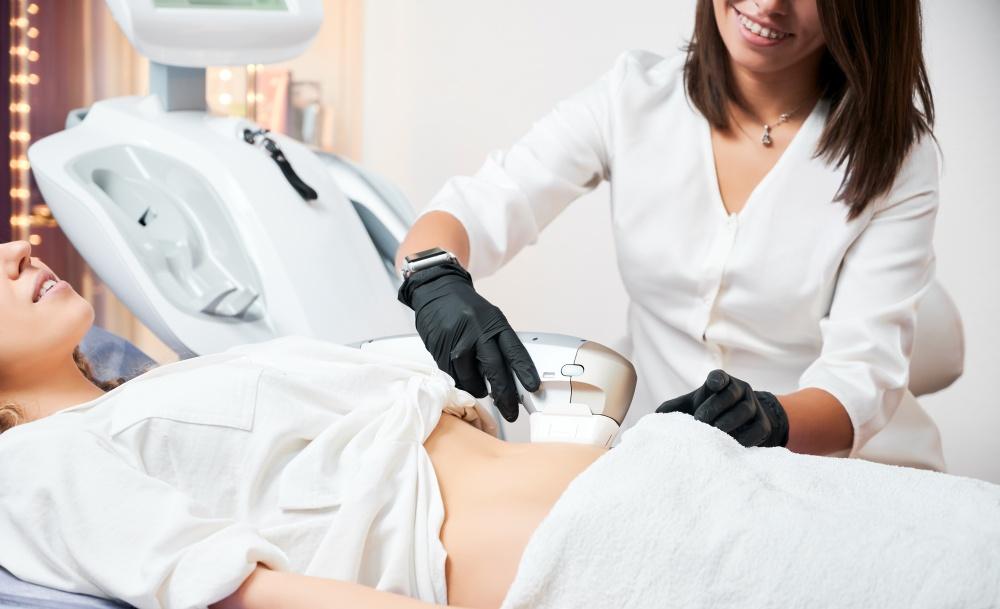
Cryolipolysis, commonly recognised under the brand name CoolSculpting, applies controlled cooling to target localised fat deposits without surgery. And since receiving FDA clearance in 2010, the technology has been studied extensively across clinical settings. For instance, peer-reviewed research reports average fat layer reductions of 14.67% to 25% a couple of months post-session, measured through calliper and ultrasound imaging.
Despite this, conversations around fat freezing remain clouded by misconceptions. Expectations often swing in two directions: either overstated or dismissed entirely.
So where does the science actually stand, and how does the body respond to this form of fat reduction?
Beyond the Cold: How Fat Freezing Actually Works
The body stores two distinct types: subcutaneous fat (the pinchable layer beneath the skin) and visceral fat (the deeper deposits surrounding internal organs). Cryolipolysis targets subcutaneous fat only.
The exact biological sequence of how this is possible is still being studied, though. Current understanding suggests that after controlled cooling is applied, affected fat cells begin to break down over several days, initiating a gradual clearing process within the body.
This approach is grounded in the observation that fat cells respond differently to temperature compared to surrounding tissue. Under controlled cooling conditions, fat cells appear more susceptible to structural disruption, while nerves, skin, and muscle remain intact. Researchers refer to this selective vulnerability as cold-induced fat necrosis, a phenomenon first observed in children who developed dimpled cheeks after sucking on frozen treats.
Following exposure, a cascade begins.
Over the following weeks, macrophages engulf and digest the crystallised fat cells. The liver then processes these lipids as metabolic waste that is gradually eliminated over time. This process unfolds steadily rather than abruptly, which is why changes do not appear immediately.
Clinical observations support this timeline. A 2014 study reported approximately 40cc of fat reduction at two months post-session using three-dimensional imaging. Clearance typically continues over 12 to 16 weeks, aligning with the body’s metabolic rhythm rather than producing instant visible change.
Fact vs. Fiction: Navigating the Top Misconceptions
Given the biological complexity outlined above, it is perhaps unsurprising that misconceptions have taken root.
Clinical data support cryolipolysis as a method for localised fat reduction. Where confusion arises is in the interpretation of the results, particularly when expectations do not align with how the body actually processes treated cells.
The following are some of the most common misconceptions.
Myth #1: This is a Substitute for Weight Loss
Cryolipolysis works on fat distribution, not body weight.
The distinction matters. Weight loss involves shrinking existing fat cells throughout the body, typically through caloric deficit. Fat reduction via cryolipolysis, by contrast, focuses on reducing fat volume within a specific area. A 2025 meta-analysis found that cryolipolysis significantly decreased circumference and fat thickness but had no significant effect on overall body weight.
What does this mean in practice?
CoolSculpting suits individuals who are already near their target weight but have stubborn pockets resistant to diet and exercise. For those seeking substantial weight reduction, however, lifestyle modification or medical supervision remains the appropriate path.
Myth #2: Visible Changes Occur Immediately
While biological changes begin during the session, the body requires time to process the affected cells. Early changes may become noticeable around three weeks, with a defined reduction appearing between 60 and 90 days. Some studies even continue to observe changes up to six months.
A 2022 multicentre study reported abdominal fat reduction rates of 28.45% at 12 weeks and 31.13% at 16 weeks, reflecting the body’s internal processes rather than a delay in effectiveness.
Myth #3: The Procedure Involves Zero Physical Sensation
Discomfort exists, but it differs substantially from surgical intervention. Most individuals report an initial pulling sensation, followed by intense cold that transitions to numbness within approximately ten minutes. After the session, temporary effects such as redness, swelling, or tenderness may appear and usually settle within one to two weeks. A rare but documented risk is paradoxical adipose hyperplasia (PAH), where the treated area increases in volume instead of reducing.
As such, careful assessment is necessary to determine suitability. For instance, cryolipolysis is also not suitable for individuals with conditions such as cryoglobulinemia or cold sensitivity disorders.
Myth #4: The Technology is Limited To The Abdominal Area
The original FDA clearance addressed the abdomen and flanks. Subsequent approvals have expanded the range considerably.
Submental area (under the chin)
Upper arms
Inner and outer thighs
Back and bra line
Buttocks (banana roll)
Knees
Over the years, the applicator's design has also evolved to accommodate different body contours. The CoolSculpting Elite system, for example, features C-shaped cups engineered to complement the body's natural curves. And according to the manufacturer, these applicators offer up to 18% larger cooling area compared to the previous generation.
Myth #5: The Removal of Fat Leads to Significant Skin Laxity
Skin elasticity concerns are valid but often overstated for cryolipolysis.
The gradual nature of fat cell clearance allows skin to adapt incrementally rather than contend with sudden volume loss. In fact, a 2014 review noted that some studies observed skin tightening alongside fat reduction, though the mechanism remains under investigation.
That said, results vary depending on baseline skin quality. Individuals with pre-existing skin laxity may see limited improvement from cryolipolysis alone. Those with reasonable skin elasticity typically find that the overlying tissue contracts naturally as underlying volume decreases.
Myth #6: Displaced Fat Cells Will Relocate to Other Body Zones
Fat cells do not migrate. Once eliminated, they are gone.
What may be observed instead is a shift in distribution if weight is gained after treatment. Remaining fat cells across the body can expand, making untreated areas appear more prominent by comparison.
Aforementioned long-term observations support this distinction. A five-year follow-up study published documented sustained fat reduction in treated areas despite changes in overall weight.
Myth #7: Every Cryolipolysis System Offers Identical Standards
Not all systems are built or operated the same way.
CoolSculpting is a specific brand with proprietary temperature profiles, applicator designs, and safety mechanisms. Other cryolipolysis devices use the same underlying science but differ in implementation. In Singapore, the Health Sciences Authority (HSA) regulates medical devices, and licensed clinics operate under the Ministry of Health (MOH) framework. These regulations ensure baseline safety, but outcomes still depend on device quality and how protocols are applied.
Myth #8: The Final Aesthetic Appears Artificial
Unlike surgical liposuction, which removes fat mechanically in a single session, cryolipolysis relies on the body's metabolic timeline. This allows the body to adjust gradually, resulting in contour changes that remain within natural variation.
Blinded investigators in clinical studies correctly identified treated versus untreated sides in 79% to 89% of cases when reviewing photographs. The changes are perceptible but remain within the range of natural variation, avoiding the sculpted appearance sometimes associated with surgical procedures.
Myth #9: The Benefits Are Reserved Exclusively for the Overweight
This myth gets the candidacy criteria backwards.
Cryolipolysis is typically suited to individuals who are already within a stable weight range but notice areas of persistent fat. These stubborn pockets are often genetically distributed: some people store fat in the lower abdomen, others in the flanks or upper arms.
Individuals within a BMI range of 18.5 to 25 often observe more defined contour changes. For those with higher BMI, results may require more sessions and appear less distinct, as the treatment is not designed for overall weight reduction.
Final Verdict: Does the Science Deliver?

So, does fat freezing work? Within its intended scope, the data remains consistent.
Systematic reviews consistently support CoolSculpting as a safe and modestly effective method for localised fat reduction.
The keyword is "modest." Cryolipolysis refines contours; it does not dramatically reshape bodies.
For those considering fat freeze treatments in Singapore, a consultation at a reputable cryolipolysis salon like Amber Beila can help determine whether the approach aligns with your goals and what a realistic timeline for results might look like.