
You can do everything right, the serums, the spot treatments, the patience, and most of us have had that one mark. The brown spot left behind by a hormonal breakout along the jaw, or the stubborn red patch that remains long after the pimple itself has gone.
For most people, the problem is not about how seriously they take their skincare routine or the products used. It is that no two marks are alike, and treating all of them the same way is probably the main reason why so little changes. Some marks are flat and discoloured. Some leave a dip in the skin. A few sit raised above it. Each type forms in its own way and responds to and fades with a very specific kind of care. So before you add another serum to your routine or book a random, discounted facial session, ask yourself: which kind of mark are you actually dealing with, and what will it take to fade it?
Not All Post-Acne Marks Are True Scars
Here is what catches most people off guard: the majority of marks left behind by a breakout are not scars at all.
A real acne scar changes the texture of your skin. It leaves a dip or a raised bump you can actually feel, not only see in the mirror. The flat brown or red marks left once a pimple heals are a separate story. They sit on smooth skin, and in most cases, they fade on their own with time and the right care.
That distinction matters because flat marks are both the most common and tend to be the most manageable. So, if that is what you see when you lean towards the mirror, clearer skin is well within reach.
Here is how the main types of acne scars and marks compare, and what each one might respond to:
Type of mark | What it looks and feels like | Where it tends to show up | What it responds to |
Flat Brown Marks (post-inflammatory hyperpigmentation) | Brown or tan spots on smooth skin, with no dent or bump | More common on darker and olive skin tones | Sun protection, brightening care, facials |
Flat Red Marks (post-inflammatory erythema) | Pink or red marks on smooth skin, often left once the pimple clears | More common on lighter skin tones | Time, sun protection, calming care, facials |
Indented Scars (ice pick, rolling, boxcar) | A dip you can feel: narrow and pitted, soft and wavy, or wider with sharper edges | Cheeks, jaw, and forehead | Clinical procedures done by a qualified dermatologist |
Raised Scars (hypertrophic, keloid) | Firm bumps that sit above the skin, and can sometimes feel tender | Chest, back, shoulders, and jawline | A medical professional |
For Flat Dark or Red Marks: What Actually Works?
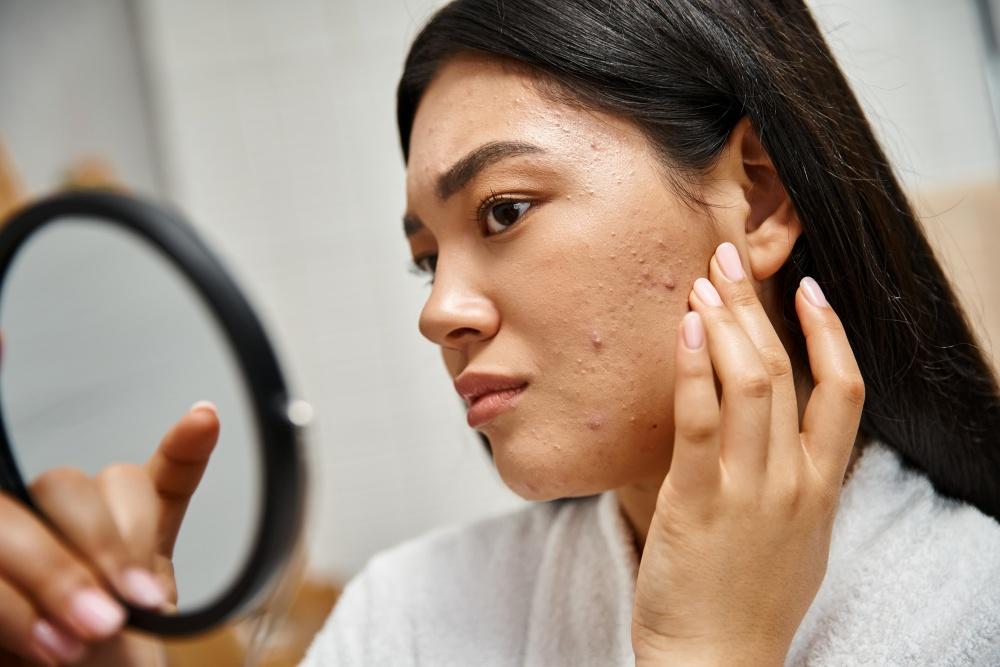
While there is no overnight fix, flat acne marks are actually the most treatable kind, and they respond well to two things done consistently: a good skincare routine paired with the occasional professional session that takes things further than any product can on its own.
Flat marks generally take a few months to fade, though stubborn discolouration can stretch to a year or more depending on the mark itself and how diligent you are with your routine.
The Basics
The non-negotiables are straightforward. Daily sunscreen of SPF 30 or higher is the one rule you cannot skip, since sun exposure darkens marks and slows their fading.
There are also endless skincare products marketed for acne and pimple mark removal, but more is not always better. A brightening ingredient like vitamin C, used consistently, does more for your complexion than a shelf full of half-finished bottles.
Professional Sessions at Amber Beila That Support Clear Skin
But, of course, there is only so much a few drops of serum can do on its own. This is where professional facial sessions can help target issues related to complexion and texture at a level that generic skincare products cannot reach.
At Amber Beila, we offer a range of facials curated around the specific concerns acne leaves behind, from lingering marks to uneven tone and dullness.
Aqua Peel Facial: Resurfaces the skin and infuses it with serums to clear congestion, brighten tone, and smooth the look of the marks acne leaves behind.
Photo Rejuvenation Treatment: Facial therapy that stimulates the skin's collagen and elastin while addressing pigmentation, freckles, and dark spots to reveal even-toned skin and a visible glow, with minimal downtime.
Deep Pore Cleansing Facial: Our deep pore cleansing facial centres on pore clarity and skin renewal, with every session shaped around what your skin's needs. As ongoing care, it keeps pores clear so fewer new marks form in the future.
Vita Eclat Treatment: A restorative facial rich in antioxidants and ceramides that repairs, hydrates, and protects. Made for dull, dehydrated, or sun-exposed skin, it softens fine lines, firms, and brings back a healthy radiance.
For Indented Acne Scars: This Is Where a Dermatologist Comes In
If your acne marks are indented, they are another matter entirely.
Unlike flat or dark marks that sit on the skin’s surface, these form where collagen was lost during healing, leaving an actual dip in the skin. This means that no cream or facial can fill that gap; any product or service that promises otherwise is overselling.
What is required in such cases is clinical procedures, such as laser resurfacing, microneedling, or fillers, carried out by a qualified doctor. A dermatologist can assess your skin in person and recommend the procedure that suits it.
Secure Your Path to Lasting Clarity
At Amber Beila, our team can look at your skin, identify the kind of acne scars you have, and talk you through the options that suit them, whether that is an Aqua Peel Facial, our Deep Pore Cleansing Facial, or another approach altogether. Book a consultation with Amber Beila, and let your skincare finally work with what your skin actually needs.