
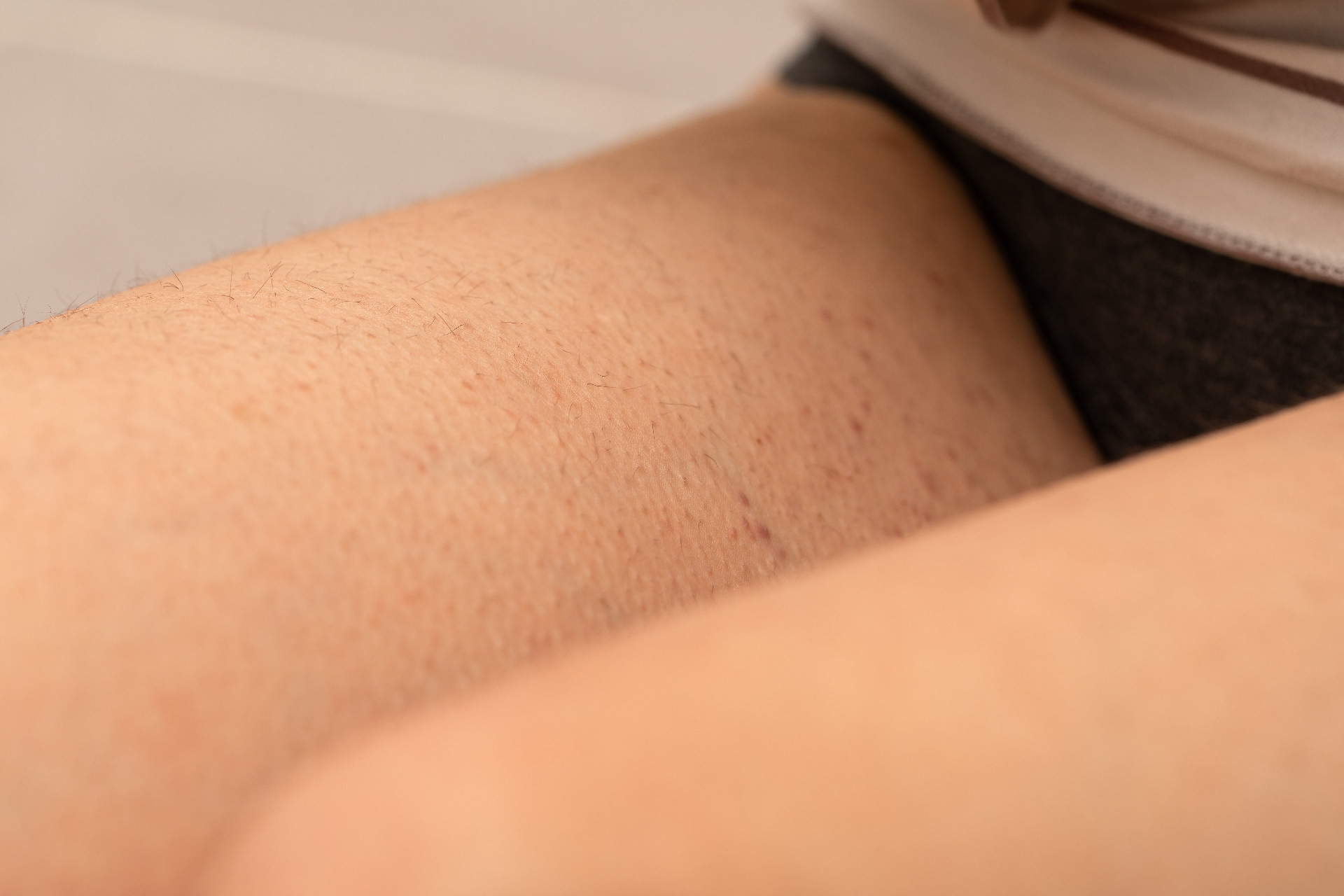
Strawberry skin (dark dots on legs, arms, or bikini area) is caused by trapped dead skin, oil, and hair inside the follicle — worsened by shaving. It's reduced through three steps: professional exfoliation to clear buildup, SHR hair removal to reduce shaving frequency long-term, and a gentle home routine to prevent recurrence.
At Amber Beila, treatment starts with an assessment — not a one-size-fits-all scrub — to identify whether the cause is shaving irritation, ingrown hairs, or keratosis pilaris, since each needs a different approach.
What Causes Strawberry Skin?
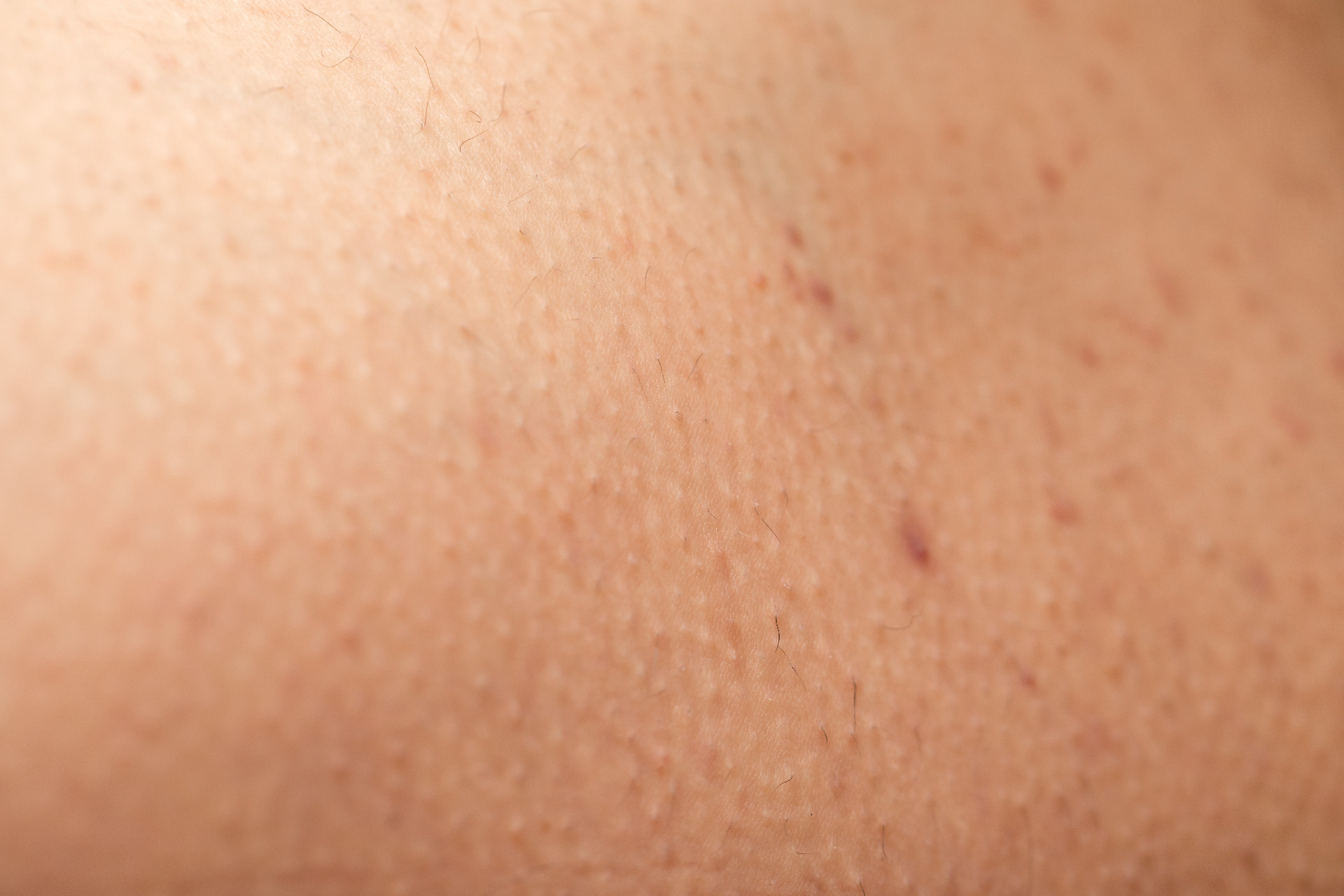
Trapped follicle debris — dead skin cells, oil, and hair residue collect in the pore opening, making it look darker
Shaving irritation — dull blades, dry shaving, repeated passes, or shaving against hair growth
Ingrown hairs — regrowing hair curls inward after shaving
Singapore climate factors — humidity, sweat, and friction from tight clothing
Keratosis pilaris — a separate, harmless condition where keratin builds up around follicles; feels rough as well as dotted, usually on upper arms, thighs, or buttocks
Why it matters: keratosis pilaris and shaving-related dots look similar but need different care plans — this is why a proper assessment comes before treatment, not a generic exfoliation package.
Why Professional Treatment Works Better Than Home Scrubbing
Over-exfoliating at home tends to leave skin tight, red, or more uneven — especially for skin prone to post-inflammatory dark marks, where aggressive treatment can cause discoloration that outlasts the original bumps.
The Professional Treatment Process
1. Skin assessment
Reviews current hair-removal method, itchiness/bumps history, products used, sensitivity
Checks for active irritation — treatment may be postponed in favor of soothing care first
Assesses skin tone to protect against post-inflammatory marks
2. Controlled exfoliation
Clears compacted dead skin without stripping the barrier
Delivered in a gentle, scheduled series rather than one intensive session
Followed by hydration, since dehydrated skin shows follicle texture more clearly
3. SHR hair removal (for shaving-related cases)
Targets the follicle during active growth phase using repeated light pulses
Reduces hair growth over a course of sessions — not an instant fix
Fewer shaving sessions means fewer opportunities for razor irritation and ingrown hairs
Results vary by hair color, density, and consistency with the recommended schedule
Skin must be properly prepped beforehand (your therapist will advise on shaving timing and products to avoid pre-session)
Skin is more sensitive to heat, friction, fragrance, and vigorous exercise immediately after
Avoid picking at bumps — this risks infection, worsened inflammation, and marks
Painful, pus-filled, or spreading bumps need medical (not salon) assessment
Home Care Between Appointments
Use lukewarm water, not hot — especially for dry-prone skin
Pat dry, then moisturize while skin is still slightly damp
If shaving: use a clean, sharp razor with lubricating product, light pressure, no repeated passes over the same area
Exfoliate only as often as skin tolerates (1–2x weekly for most; less for sensitive skin) — never layer multiple strong exfoliants
Apply daily sunscreen to exposed areas to prevent dark marks from deepening
What Results Look Like
Softer texture: noticeable soon after a well-matched exfoliating/hydrating treatment
Fewer shaving bumps: typically several weeks of consistent care
SHR results: follow the hair-growth cycle, not a single session