
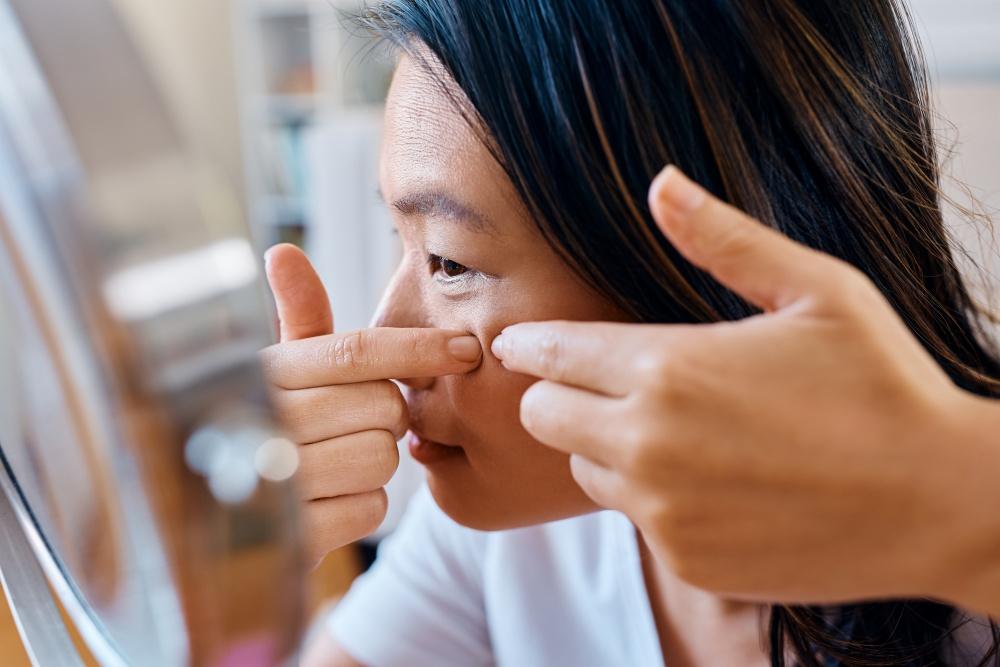
The mirror rarely tells the full story. Those tiny black dots clustered across the nose and chin prompt many to reach for pore strips, extraction tools, and aggressive cleansers. Yet not every visible speck is a blackhead, and treating them as such can damage the facial skin, leaving it further away from clarity.
Why? Because what appears similar on the surface can behave very differently beneath it.
So, which are you actually dealing with? Sebaceous filaments or blackheads?
Do Sebaceous Filaments Have a Purpose?
Far from being an impurity, sebaceous filaments are a standard component of healthy skin anatomy, serving a protective function: maintaining the skin's hydration and barrier integrity.
Every pore contains fine, thread-like structures, which act as channels guiding natural oils from the sebaceous glands to the skin's surface. This continuous flow forms a light lipid veil that protects against dehydration and external stressors. They exist in all skin types but become more visible in individuals with higher sebum production or larger pore diameters.
The Biological Function of Oil Channels
Within each pore, a sebaceous filament is composed of sebum, dead skin cells, and fine vellus hair. Together, these elements move upward through the follicular canal, depositing a protective lipid layer on the skin's outer surface.
The sebum itself is a complex mixture of triglycerides, wax esters, and squalene. When this oil flows freely, the skin retains suppleness, resilience, and a natural radiance.
Why Some Pores Appear More Prominent
So if everyone has sebaceous filaments, why do some people notice them more than others?
Several factors influence how visible they become:
Genetics: You inherit your pore size, sebum production levels, and skin texture. Those with naturally larger follicles or oilier complexions tend to see more visible filaments, particularly across the T-zone.
Age: During adolescence, hormonal shifts cause sebaceous glands to enlarge and ramp up oil production. Later in life, as collagen diminishes and skin elasticity changes, pores may appear larger simply because the surrounding tissue offers less structural support.
Environment and habits: Sun exposure, dehydration, and overly aggressive cleansing can trigger the sebaceous glands to compensate by producing more oil, making filaments more prominent as a result.
Identifying the Difference: How to Know If It’s Sebaceous Filaments or Blackheads?
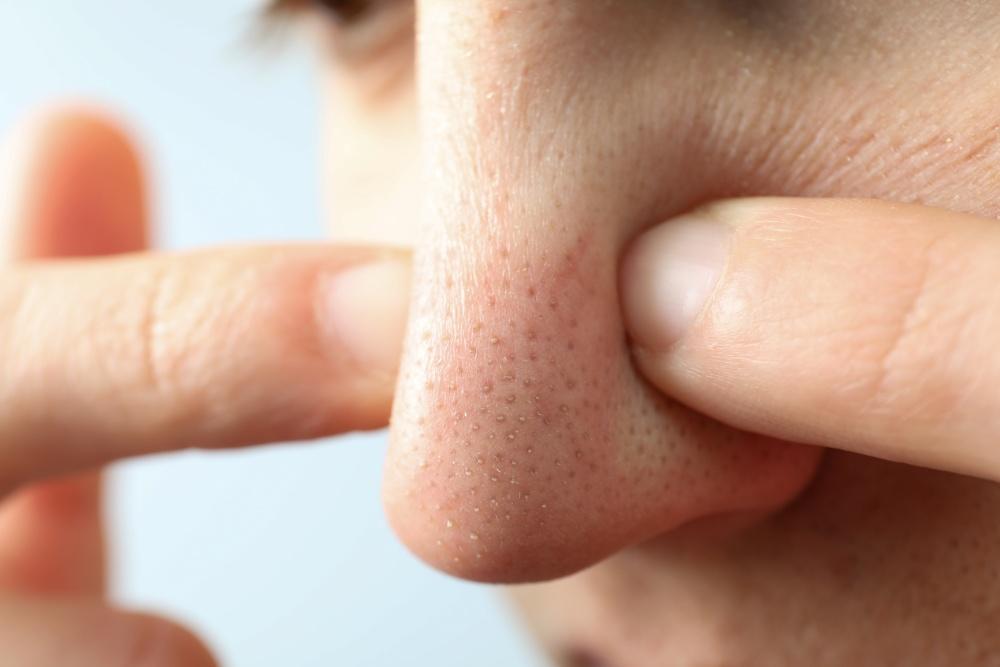
You lean into the mirror and see a scattering of tiny dots across your nose. Blackheads, right? Not necessarily. Because sebaceous filaments and blackheads look so similar at first glance, many people assume they are the same.
Here is how to tell them apart:
1. Visual Presentation and Colour
Sebaceous filaments sit flat against the skin and tend to be lighter in colour: grey, tan, or slightly yellowish, often with a translucent quality that blends into the surrounding complexion.
Blackheads are darker and more distinct. That characteristic black or deep brown colour comes from oxidation. When the plug of sebum and dead cells reaches the pore opening, exposure to air darkens the material, making the spot more visible than the surrounding skin.
2. Tactile Texture and Surface
If you run a fingertip across your nose and feel nothing unusual, you are likely touching sebaceous filaments. They sit flush with the skin and produce a smooth or only slightly textured feel.
Blackheads feel different. The follicular plug creates a slight bump, subtle enough that you might miss it visually but noticeable when you touch it.
3. Extraction Results and Refill Cycles
Squeezing a sebaceous filament (not recommended, but commonly attempted) may release a thin, waxy strand. Within a few days or weeks, the filament reforms. This is not a failure of extraction but rather normal skin function resuming.
Extracting a blackhead yields a solid, darkened plug. Once removed, the blackhead does not automatically return unless the underlying conditions (excess oil, accumulation of dead skin cells, pore blockage) persist.
4. The Different Solutions Needed
Because sebaceous filaments are structural rather than pathological, the goal is not elimination but minimisation. Oil regulation, gentle exfoliation, and hydration can reduce their visibility without disrupting skin function.
Blackheads require a different strategy. The blocked pore must be addressed through methods that dissolve the plug, accelerate cellular turnover, or physically clear the obstruction.
How Can You Clear Your Pores?
Not all pore concerns respond to the same solutions. What works for sebaceous filaments may prove inadequate for blackheads, and vice versa.
How to Get Rid of Sebaceous Filaments
To remove sebaceous filaments, the primary objective is oil regulation without stripping your skin.
Double cleansing: Apply an oil-based cleanser first to dissolve excess sebum and loosen debris within the pore canal. Follow with a water-based cleanser to remove any daily build-up without disrupting the lipid layer.
Oil-soluble acids: Beta hydroxy acid (salicylic acid) penetrates the pore lining to dissolve sebum and dead cell build-up. Regular use helps unclog the pores and keep filaments from becoming visually prominent.
Hydration: When your skin is adequately moisturised, the sebaceous glands are less likely to overcompensate with excess oil production.
How to Get Rid of Persistent Blackheads
Stubborn blackheads often require more intensive care.
Vitamin A derivatives (retinoids): These accelerate cellular turnover, encouraging the skin to shed dead cells before they accumulate within pores.
Professional extractions: Performed by trained therapists, professional-grade extractions offer a controlled method for clearing established plugs without causing trauma or scarring.
Non-comedogenic products: Formulations tested to confirm they do not block pores help prevent new obstructions from forming.
Deep pore cleansing: These facials combine thorough cleansing, targeted extraction, and restorative hydration to reset the skin. Regular sessions can help maintain clarity while supporting smoother texture over time.
The Essential Path to a Refined Complexion
The impulse to squeeze out the sebaceous filaments or blackheads is understandable but never advisable since it could lead to permanent pore dilation, post-inflammatory pigmentation, and scarring. That brief satisfaction of clearing a pore often comes at the cost of long-term texture damage.
If you have been battling what you thought were blackheads with little success, a professional assessment may help. At Amber Beila, a Deep Pore Cleanse can help determine exactly what your pores require, combining expert analysis with targeted extraction and hydration to restore clarity and balance. Suitable for skin experiencing congestion, uneven texture, or visible pore build-up, our deep cleanse facials can help reveal a smooth surface.